Why Is It So Difficult for Inclusive Lenders to Get Local Capital? Lessons From M-KOPA
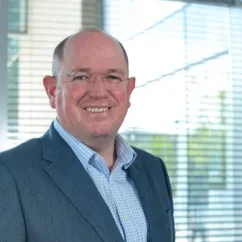
Nick Gunning is the Director of Asset and Liability Management (ALM) at M-KOPA, based in Johannesburg, South Africa. Before joining the emerging-market fintech platform, he served as Head of Securitisation at Standard Bank Corporate and Investment Banking, where he specialized in debt capital markets, asset-backed securitization (ABS), and structured finance solutions across Africa.
In Focus
In Focus is a new FinDev series in which practitioners in inclusive finance share their experience and analysis of the issues they’re grappling with and the lessons they’re learning.
Interview by Valdete Berisha
Read time: 16 minutes
Pay-as-you-go asset finance has helped millions of people who earn a daily income buy solar systems, smartphones and electric vehicles in small daily payments. These customers usually sit outside the reach of traditional banks, so they generally can’t get a loan to cover the cost. The lenders that offer this kind of finance need to borrow so that they can serve more customers. But their debt capital options are limited and often come in U.S. dollars, while their customers repay in local currency, and the mismatch is costly to manage. Local banks are the biggest source of local currency in many markets, but many are not yet set up to lend to these businesses.
M-KOPA is one of these pay-as-you-go lenders. It was started over 15 years ago by members of the original team that developed M-Pesa. It financed solar devices until about 2020 and now finances smartphones and electric vehicles. To date, it has served more than 10 million customers in Kenya, Uganda, Nigeria, Ghana and South Africa.
Nick Gunning is director of asset and liability management at M-KOPA. Before M-KOPA, he spent 15 years in investment banking. In this interview for FinDev Gateway, he talks with Valdete Berisha about how M-KOPA has handled the cost of dollar debt, what made local banks willing to lend to it, and what development finance institutions (DFIs) can do to unlock more local currency financing.
Valdete: What was the idea behind M-KOPA, and who was it meant to serve?
Nick: We wanted to build lasting financial relationships with everyday earners, giving them a way into the financial system and helping them grow from there. From the start, that way in was asset finance.
Our customers want to buy assets that add value to their lives, but they can’t necessarily afford the upfront cost. And because of their informal employment or income situation, they struggle to show traditional financiers that they can repay. There is clearly a bankable case, because our customers have reliable sources of income. They just struggle to show it in a way that can fit the requirements of the traditional financial system.
The answer was to break one large payment into small payments that match the rhythm of their daily income. For example, if you ask our everyday earner customers, “Can you afford $360 up front?” they’ll probably say no. “How about $30 a month?” Again, probably still no. “How about $1 a day?” Yes, because that is manageable as it matches their cash flow. There will be days they can pay and days they can’t, but over time most can afford it.
That required a payment system that could process many micropayments at low cost. The emergence and large-scale adoption of mobile money in Africa made that possible. The other piece of the puzzle was to restrict usage of the asset on days when the customer did not pay. This was done through embedding SIM connectivity in the assets, now known as the internet of things, or IoT.
Valdete: How did you fund M-KOPA in the early days, and how has that changed over time?
Nick: At first, the company raised its own capital, together with some development capital. One of the earliest lenders was Commercial Bank of Africa, a Kenyan bank that is now part of NCBA. In 2016, Stanbic came in, and that was a material development. At that stage the business was quite small but Stanbic saw the potential of the business and had the necessary skills and capacity to structure a debt package while managing the risk of an early-stage company scaling up. As M-KOPA expanded, it could take the Stanbic relationship into other markets. But Stanbic couldn’t be expected to fund the whole package, so we brought in other funders alongside them under the same facility structure.
Today in Kenya, our oldest market, we have about $240 million in commitments. Lenders include commercial banks such as Stanbic and NCBA; DFIs such as British International Investment, the International Finance Corporation, the US International Development Finance Corporation and FMO, the Dutch development bank; and some asset managers allied to the DFIs. But the catalyst was Stanbic.
Valdete: What held you back as you tried to grow and reach more people?
Nick: It’s arguably the volume and reliability of debt commitments: how much debt we could raise, and whether we could count on this volume over time. Equity is hard to come by, so debt has determined how fast we can meet the demand of our customers.
You can see what access to capital has meant for growth. From our start to 2019, we served just under a million customers. In 2020, we crossed 1 million. It took the next four years to get from 1 million to 5 million, and the last two years to go from 5 million to 10 million. As our access to capital grew, we were able to reach more of our everyday earners.
Valdete: What does better access to capital mean for your customers?
Nick: The smartphones we finance enable our customers to gain access to the internet and the digital economy. This allows them to create better connections, promote their businesses, build better supply networks and reach new markets. Our electric bike and battery options have been shown to enable drivers to reduce their daily costs and, in doing so, improve the quality of life for themselves and their families.
For us, the asset is the means to build financial inclusion: to help people who can’t access finance become “bankable”, and to then be the partner that serves their growing financial needs. Access to capital determines how many people we can serve. We’ve now served more than 10 million customers, and there are many more everyday earners deserving our products.
Access to capital also shapes who we can reach, and women have been the clearest case of this. Since 2024, gender inclusion has been a strategic objective across all our markets, with a goal of 50% female customers. Women made up 40% of our active customers in 2025. Our 2025 impact survey shows why this matters: 43% of women said their M-KOPA loan was their first formal loan (compared with 36% of men), and 81% said they could not have afforded a smartphone without M-KOPA (compared with 78% of men). In 2024, we received funding from the Gates Foundation to test new approaches to closing this gap. With Yale Inclusion Economics, we piloted a flexible repayment feature with 100 customers in Kenya. Early results showed stronger repayment behavior, and we are now preparing a randomized controlled trial with up to 6,000 participants. The lesson for us is that women have been underserved by the formal system, and that the right product design, backed by capital, can make inclusion the default rather than the exception.
the right product design, backed by capital, can make inclusion the default rather than the exception.
Valdete: You’ve talked about how much access to capital matters. Why does it matter which currency that capital comes in?
Nick: As an example, our Kenyan customers pay us in shillings, so ideally our debt should be in shillings too. In Kenya we have debt in U.S. dollars, which we chose to hedge, or in other words, protect against currency swings. Without a hedge, a weaker shilling makes dollar debt more expensive, because we then need more shillings to repay the same dollars. Not protecting against currency swings exposes the profitability and sustainability of the business. Non-local currency funding therefore comes with an additional currency cost.
Our debt is what we lend to customers, so redeeming debt means lending less and growing more slowly. Instead, we prefer to refinance this debt in advance of it becoming due, replacing facilities with new ones. The problem is that this makes dollar debt more expensive to hedge. The standard hedge is a cross-currency swap, a contract that locks in the exchange rate for the life of the loan. But each time we refinance, the swap has to be canceled, or unwound, and that costs more money. There are other hedging products but these either result in similar costs or don’t result in the same amount of protection.
Valdete: How do loans from DFIs compare with your dollar debt?
Nick: DFIs lend to us in shillings and hedge the currency risk themselves. They can do that more cheaply than we can, so the loan is a more attractive alternative to the USD debt. But when we refinance, the DFI’s hedge has to be canceled too, and we pay for it, which in our experience can be as high as 10% of the amount we borrowed. Spread over three years, that’s about three percentage points a year.
So the best source of capital is local currency, and in many markets that means local commercial banks. To access them, you have to be bankable, meaning you meet their credit standards. Or you need a partner bank that understands how you’ll get there and is willing to lend to you in the meantime.
So the best source of capital is local currency, and in many markets that means local commercial banks.
Valdete: Looking back, what made the biggest difference in getting domestic banks to lend to you?
Nick: Two things: having the right partner bank early on, and becoming profitable.
Our partner was Stanbic. It has local currency balance sheets across our markets and the required experience to address our requirements. To lend to us, a bank needs to understand our receivables, and the cash flows they generate, and translate that into something its credit committee can get comfortable with. Stanbic used that expertise to set up a structured facility for us – debt secured against our customer loans. The bank relies on the future payments from those loans together with recourse to the company: if those payments fall short, it can claim against M-KOPA itself.
Valdete: Why couldn’t a local bank do that?
Nick: Many local banks lend mostly to traditional corporate clients, so a business like ours is unfamiliar to them. The expertise to understand receivables and cash flow like ours usually sits in teams with strong structuring experience which are not that common in our local markets. Stanbic has the benefit of being active in markets where these practices are more common, like South Africa, and therefore has built more team capacity over time, which it is then able to use in other markets.
Valdete: And the second part, profitability. What changed once you got there?
Nick: The structured facility gave us enough funding to grow our loan book, the loans we have out to customers. For many banks, a company that isn’t profitable is almost an automatic no. That’s why we needed a partner like Stanbic that could see how we would get to profitability. Now that we’ve achieved this milestone we’re able to explore debt solutions that are more accessible to local commercial banking partners and institutional capital. In Kenya we’re now moving to a senior secured facility: a standard corporate loan with security over our assets. That’s the product local banks already offer, so more of them can now lend to us.
Valdete: M-KOPA was already a large company when it made this shift. Does that mean other fintechs need to reach that size before domestic banks will lend to them?
Nick: It depends on the bank. There are pan-African banks, and there are banks that are only domestic or regional. I don’t think you need our scale to access the pan-African ones, such as Stanbic, Absa, and RMB. What you do need is a path to profitability and a clear story about how you’ll grow. This is not to say that we got here by focusing on profit. Our North Star is informed by our mission of financial progress for everyday earners. By definition, this means growing our active customer base. Typically people access digital and financial services for the first time with us and graduate to access additional products as they progress. Our goal is to build long-term financial relationships with customers who stay with us because they see the value and thus keep coming back. That was our main objective: financial inclusion. Profitability followed. I wouldn’t change that, but if you can show profitability sooner, that helps.
Valdete: What else do banks want to see?
Nick: The size of your market matters too. Our addressable market is the hundreds of millions of people in sub-Saharan Africa, and banks could see how far that could go.
Then there’s data. Fintechs can use data in ways most organizations can’t. Show lenders how you collect and use it, and build a track record. This is the evidence and narrative that bank partners will require to make their credit decisions.
Valdete: Is there anything you would have done differently?
Nick: Our asset finance product is generally understood, and other companies have since adopted the same or similar offerings. However, when talking with new potential lenders there is an iterative discussion where we have to remind them that our loans don’t conform with traditional financing terms which most finance professionals will have as a base understanding. Banks think in terms of interest, tenor, meaning the length of the loan, and days in arrears. What matters to us is the deposit customers pay up front, the small daily payments, often 50 cents to $1, and how customers pay and use the phone. Explaining this difference clearly is key and refining the narrative has helped reduce the number of iterations. A better recognition of their base understanding has helped improve these early discussions. We’ve gotten a lot better at it.
Valdete: You’ve looked at securitization as a way to fund M-KOPA’s loans. How did you think about it as an option?
Nick: Securitization is a great source of capital: raising debt against future cash flows, which in our case are the payments customers owe us. It’s genuinely a very good product, particularly for asset-liability matching, lining up the timing of what you owe with what comes in, and for securing a large volume of debt at attractive pricing. In many ways our structured facility from Stanbic is based on this approach. In Kenya, we actually explored going further down this path in a lot of detail, up to the point where we secured a fully underwritten structure from two commercial banks.
The key difference from a corporate loan is that securitizations limit lender recourse to the receivables, so they come with many essential restrictions on the business to safeguard the interest of the lenders. Our objective also isn’t just asset finance. It’s to build a financial relationship with each customer, with several products that establish a customer lifetime value which can present some challenges to doing securitizations but these are not insurmountable. Side by side, a corporate loan offer more flexible terms that are better suited to the development stage of our business. We’ve therefore opted for the corporate loan route for now but have retained all the learnings and will continue to explore these options in the future.
Valdete: Local investors such as asset managers and insurers also hold a lot of local currency. Could they lend to fintechs like M-KOPA?
Nick: We see some opportunities in East Africa, especially Kenya, where some investors are building, and in some cases already have, the necessary capacity. South Africa already has a well-established investor base, as does Nigeria to some degree.
Valdete: So, in a market like Kenya, how would fintechs tap into that money?
Nick: The least painful way is through a commercial bank. Rather than going to investors directly, I’d borrow from a bank, which can then pull in other lenders through its syndication desk. You can still get to know those lenders, but the bank does the deal. It’s a win for the bank too: it keeps the lending and has a product to offer lenders. If you want to stay nimble, a banking partner works better.
Valdete: Last question. What could DFIs and other funders do to unlock more local currency financing?
Nick: I see two models that could help companies like ours in their early stages.
The first is an aggregator. Instead of lending to each company, a DFI funds a vehicle that either pools several companies like ours, or funds each within its own compartment, and handles the currency hedge itself. If one company repays, the money continues to fund the pool or, if the vehicle is compartmentalized, moves excess amounts to another compartment, which helps offset breakage costs. I’m not sure it’s DFIs holding this back. It’s perhaps the infrastructure and costs to set it up. Normally an investment bank would build these structures. But in Africa, the opportunity set is many, many small deals, each needing hours of work. That’s what I struggled with as an investment banker. Kaleidofin is already doing it, with support from the Gates Foundation and others.
The second is for DFIs to sit behind local banks with guarantees or risk-sharing, so the banks can lend in local currency. That works better than lending to us directly. Direct DFI loans come with conditions, understandably, since each DFI has its mandates. But a growing company needs to stay nimble, and that capital can be restrictive.
Both models have been developed and used, with perhaps limited success so far. More effort there would be hugely beneficial.
For guarantees to work, DFIs need to be clear about who takes the losses and when banks can call on the guarantee. DFIs should say plainly that there will be losses, and that using the guarantee is exactly what it’s for.
Latest from Our Blog
View all blog posts
What It Takes to Build Market Infrastructure That Supports Credit for Women at Scale
Is East Africa Ready for Open Finance?